Dirty Little Secrets: How NBA Defenses Are Quietly Dismantling the Pick-and-Roll Before You Even Notice
Every basketball fan knows the pick-and-roll. It's the bread and butter of NBA offense — a simple concept that's been torturing defenses since the days of Stockton and Malone. But here's the thing: the best defensive teams in the league have gotten really, really good at making it look like the pick-and-roll is failing on its own merits, when the truth is a whole lot messier.
What's actually happening in those moments — the half-second before the screen gets set, the subtle body positioning, the phantom contact that never gets called — is one of the most fascinating chess matches in professional basketball. And once you see it, you genuinely cannot unsee it.
The Setup Before the Setup
Here's where it all begins, and it's not where most people are looking. The real disruption doesn't happen when the big man plants his feet to set the screen. It happens a full two to three seconds earlier, when the on-ball defender starts crowding the ball-handler's approach lane.
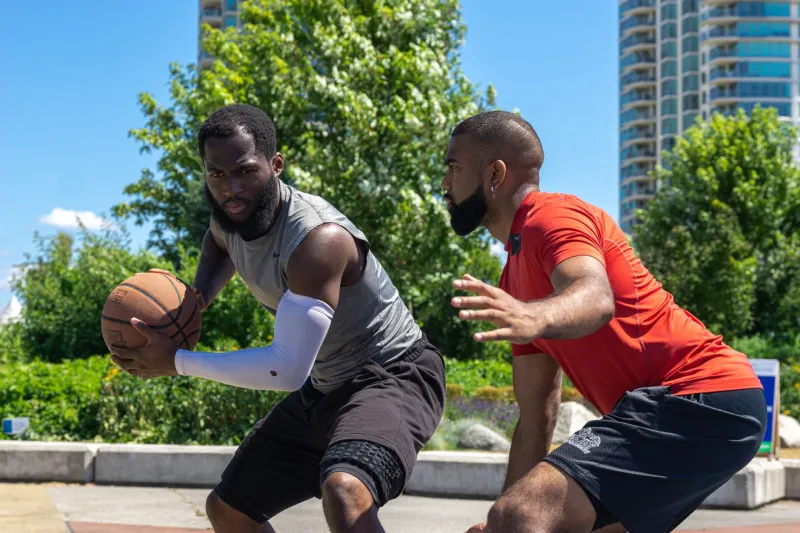
Elite defensive guards — think of how Jrue Holiday operates, or the way the Celtics have trained their backcourt defenders — will subtly body up the dribbler before the screener even arrives. The goal isn't to foul. It's to force the ball-handler to catch the screen at an awkward angle, essentially making the geometry of the play work against the offense.
If the guard can push the dribbler two feet in the wrong direction before that screen arrives, the entire action gets compressed. The roll man has less space, the passing lane shrinks, and what looked like a clean two-on-two advantage on the whiteboard suddenly feels like a traffic jam.
Off-Ball Contact: The Art of the Invisible Foul
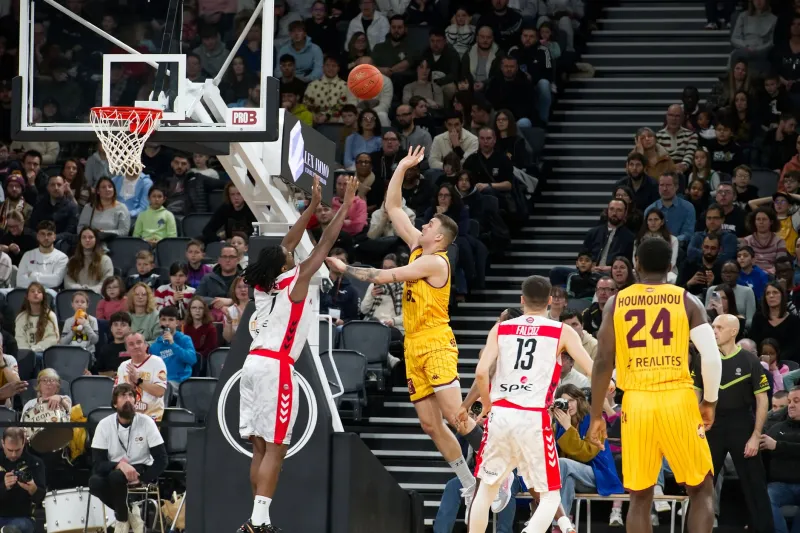
While everyone's watching the on-ball action — and while the referee is tracking the ball — something sneaky is happening on the weak side. The defending big man, the one tasked with either hedging hard or switching onto the guard, is using his off hand, his hip, and sometimes his entire body to bump the rolling big man just enough to kill his momentum.
This is the gray area that coaches have been exploiting for years. The contact is real. It's intentional. But it's timed to occur in the exact moment when officials are focused on whether the ball-handler is about to turn the corner. Nobody's watching the big man-on-big man action away from the ball.
The Denver Nuggets, for all their offensive brilliance with Nikola Jokic, have had to deal with this constantly. Teams don't just switch or hedge on Jokic's rolls — they bump him, redirect him, slow his first two steps. By the time the foul would be obvious enough to call, Jokic has already adjusted, and the moment is gone.
Exploiting the Screener's Window
There's a rule in the NBA that says a screener must be stationary when contact occurs. But "stationary" is doing a lot of heavy lifting in that sentence. Defenders have become masters at timing their movement to make a legal screen look illegal — essentially baiting the screener into a moving screen call by initiating contact right as the screener settles.
The technique works like this: the defending guard will actually run into the screen slightly, absorbing contact on purpose, then sell the hit with enough drama to draw the official's eye. If the screener so much as twitches — adjusting their balance, leaning in the slightest — that's a moving screen. Call made, possession over, play dead.
Boston has been particularly surgical with this. Their defensive system under Joe Mazzulla essentially trains defenders to treat every screen as an opportunity to manufacture a call rather than just fight through it. It's not dirty, exactly. But it's absolutely premeditated.
The Referee Angle Problem
Here's something that doesn't get nearly enough attention: pick-and-roll defense is partly a game of exploiting where referees are physically positioned on the floor.
NBA officials rotate and move, but they can't be everywhere at once. Sophisticated defensive staffs — and yes, teams absolutely study this — know that certain officials have tendencies to trail the play toward the corner, which leaves the nail area (that middle zone just above the free-throw line) as a blind spot. That's exactly where a lot of the most physical pick-and-roll disruption happens.
The Miami Heat under Erik Spoelstra have been doing this for a decade. Their defenders don't just guard the pick-and-roll — they work the space between the officials. Contact that happens in the dead zone between two referees' sightlines is contact that almost never gets called. It's not a conspiracy. It's just geometry, and smart teams use it.
Which Teams Are Doing It Best Right Now
The Minnesota Timberwolves deserve serious credit here. Their defensive system — built around Rudy Gobert's ability to protect the paint while guards like Anthony Edwards make life miserable on the perimeter — layers all of these tactics together. They hedge, they bump, they crowd the approach, and they're disciplined enough to do it without fouling at a rate that kills them in crunch time.
The Oklahoma City Thunder are another team that's quietly mastered this. Their youth and athleticism let them apply pressure at multiple points of the pick-and-roll simultaneously, and their communication is sharp enough that they're rarely caught in the kind of breakdown moments where the offense can exploit a seam.
On the flip side, teams that rely purely on switching — without the physical disruption tactics layered on top — tend to give up more clean looks than their defensive ratings suggest they should. Switching is great, but if the offense can set a clean screen and get the mismatch they want, you've already lost the battle before it started.
Why This Matters for the Casual Fan
If you're watching a game and a pick-and-roll just seems to fizzle out for no obvious reason, there's almost always a reason. It's just happening fast, in space you're not watching, in ways that referees are either choosing not to call or genuinely cannot see.
The pick-and-roll isn't broken. The defenses have just gotten smarter about where and how they break it. That's not a complaint — it's actually one of the most compelling tactical arms races in the sport right now.
Next time you're watching a game, pull your eyes away from the ball for a second when a pick-and-roll is developing. Watch what the defending big man is doing with his off hand. Watch how the guard is positioning two seconds before the screen arrives. You'll start seeing the game completely differently — and honestly, you'll appreciate just how much work is going into making basketball look effortless.
The best defense isn't always the loudest. Sometimes it's the one you were never watching in the first place.