Cold-Blooded or Just Lucky? The Real Science Behind NBA Clutch Mythology
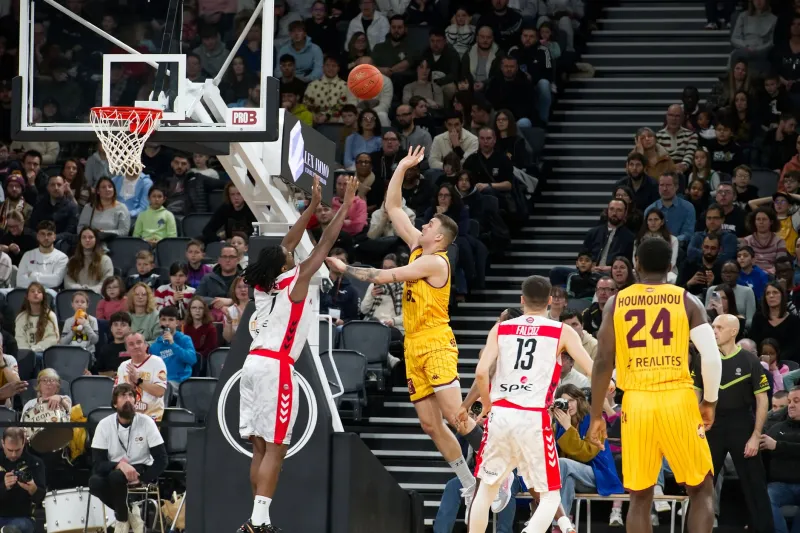
Cold-Blooded or Lucky? The Real Science Behind NBA Clutch Mythology
Every basketball fan has a moment burned into their memory. Maybe it's a mid-range pull-up over two defenders, or a step-back three with the shot clock dying. The announcer loses it. Your group chat explodes. And just like that, another legend is born — another player gets stamped with the most coveted label in the sport: clutch.
But here's the thing nobody wants to hear at the bar after the game: a lot of what we call "clutch" might just be math doing its thing in the most dramatic setting possible.
What Does 'Clutch' Actually Mean?
Before we start poking holes in anything, it's worth nailing down the definition. The NBA officially tracks clutch performance as plays that happen in the final five minutes of a game when the score is within five points. That's the lens we're working with here — not the vibes, not the lore, but the actual crunch-time situations where games are genuinely on the line.
And when you run those numbers across multiple seasons, something interesting happens: the gap between a player's regular performance and their clutch performance is often a lot smaller — or a lot more inconsistent — than the highlight packages would have you believe.
Some of the players who get crowned as assassins by the media shoot worse in clutch situations than they do in the first quarter. Others who never get the credit are quietly ice-cold when it matters most. The narrative and the data are frequently living in completely different zip codes.
The Survivor Bias Problem
Here's where it gets genuinely fascinating. Think about how basketball stories get told. When a star player hits a big shot, it gets replayed a thousand times. When that same star airballs a game-winner or turns it over with the game on the line, the coverage moves on pretty fast. The miss gets buried. The make gets immortalized.
That's survivor bias doing its dirty work, and it's absolutely shaping how we think about clutch performance. Our brains are wired to remember the dramatic successes and quietly discard the failures. Over a career, a player could be shooting 38% in clutch situations — legitimately below average — but if three of those makes happened in playoff games that got replayed on ESPN for a decade, that player gets a reputation as a stone-cold killer.
The storytelling machine in professional sports is incredibly powerful. Once a player gets the clutch label, every subsequent big shot confirms the narrative. Every miss gets explained away as an off night. It becomes nearly impossible to dislodge, regardless of what the actual data says.
Sample Size Is Quietly Killing the Conversation
Another massive issue: clutch situations just don't happen that often. Think about how many truly close, high-stakes possessions a player actually gets across an 82-game season. We're talking about a surprisingly small dataset for most players — sometimes fewer than 50 clutch-time field goal attempts in an entire year.
Statisticians will tell you that's nowhere near enough data to draw reliable conclusions about a player's "true" clutch ability. With that kind of sample size, random variance can make a decent player look like a legend or make a legitimate star look shaky. The fluctuations are enormous. Year to year, even the most celebrated clutch performers see their numbers swing wildly, which is exactly what you'd expect from a small sample rather than a stable underlying skill.
If the clutch gene were truly a consistent, repeatable trait — like a player's three-point shooting mechanics or their defensive positioning habits — you'd expect to see it show up reliably season after season. For most players, that repeatability just isn't there in the data.
So Does Anyone Actually Have It?
Okay, fair question — and the honest answer is: maybe a few guys, but far fewer than the legend count suggests.
What the research does support is that certain players make better decisions under pressure, even if their raw shooting percentages don't necessarily spike. They're better at taking high-percentage shots in clutch moments rather than forcing difficult looks. They turn the ball over less. They get to the free-throw line at a higher rate. That kind of disciplined, low-variance play in high-pressure situations is genuinely valuable and probably does reflect something real about a player's mental makeup.
There are also players who simply have the ball in their hands more in clutch situations — and getting those opportunities in the first place is itself a skill. Earning your coach's trust, being in the right position on the floor, knowing the play being run — all of that matters and isn't just luck.
But "I make better decisions and my coach trusts me" is a very different story than "I elevate my game to superhuman levels when the pressure is highest." The former is a real, coachable quality. The latter is mostly mythology.
Why We Need the Story Anyway
Here's the part where we stop being completely cold about this. Even if the clutch gene is more constructed narrative than biological fact, it serves a real purpose in how fans connect with the game.
Basketball is entertainment. The stories we build around players are part of what makes it compelling. The idea that certain people are just built different when the lights are brightest — that's genuinely exciting to believe. It gives us heroes. It gives us drama. It makes a regular-season Tuesday night game in November feel like it might produce a moment you'll tell your kids about.
And sometimes, against all the statistical odds, the narrative and the data actually line up. There are players who have consistently shown up in the numbers, not just the highlights. Crediting them properly — while being more skeptical about the guys who are mostly riding a great PR machine — is really what good analysis is about.
The Takeaway for Real Fans
Next time your favorite player hits a ridiculous shot with three seconds left and everyone starts screaming about killer instinct, let yourself enjoy it. Seriously — that's what sports are for.
But maybe also pull up the clutch stats later. Check if it's part of a real pattern or just a beautiful moment in a sea of noise. Ask whether the player is making smart decisions under pressure or just getting hot at the right time. Dig into whether the reputation matches the record.
The truth is usually more interesting than the myth anyway. And at BasketBanget, we'd rather give you both — the goosebumps and the context.


